




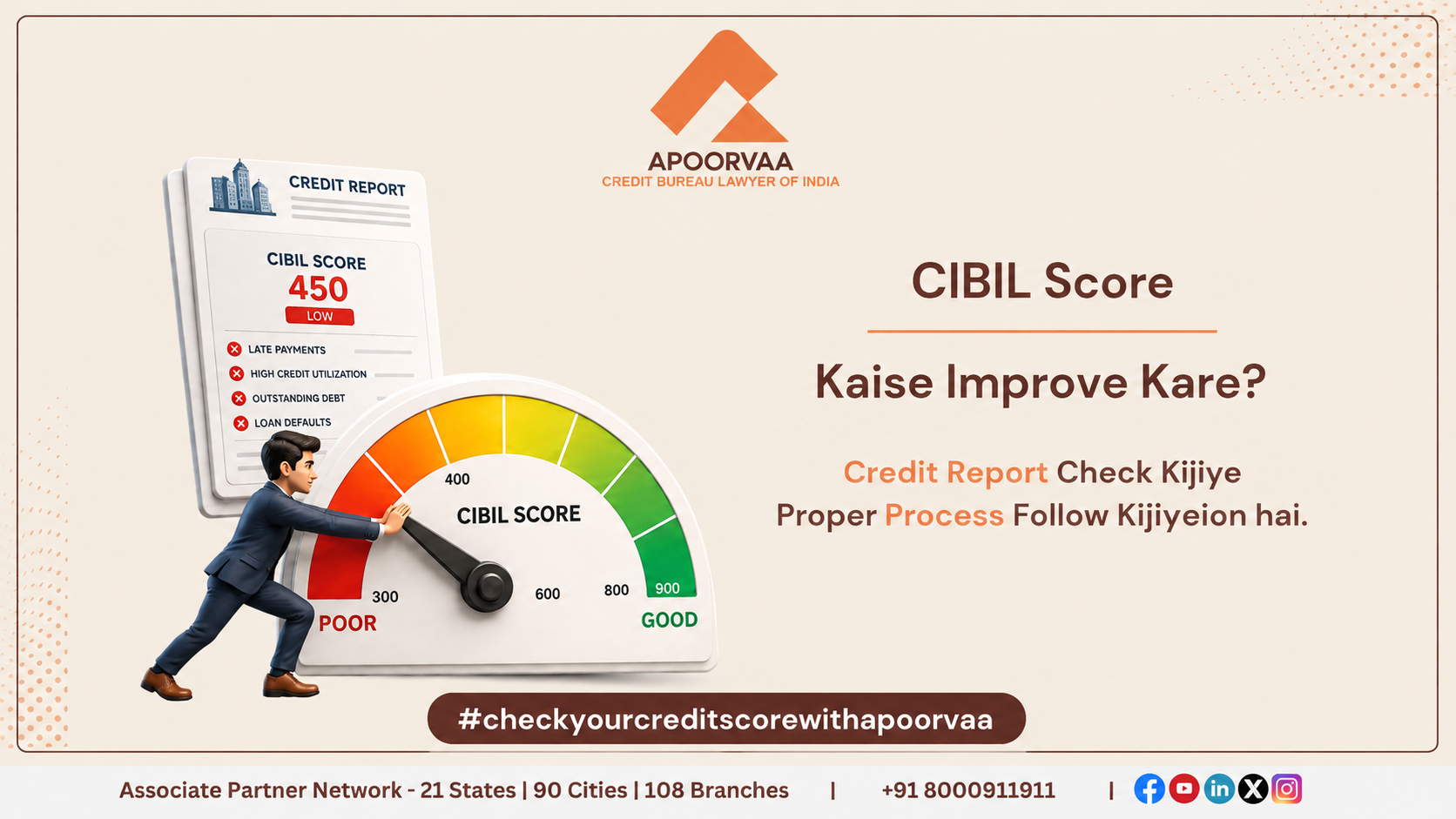
One of the most common questions borrowers ask is: “How can I improve my CIBIL Score quickly?”
The internet offers countless answers. Some promise instant improvements, while others claim that a few simple tricks can significantly increase your score within days.
The reality is quite different.
A CIBIL Score is not designed to change overnight. It reflects your borrowing behaviour, repayment discipline, credit history, and information reported by financial institutions over time. Improving it is a structured process that requires patience, accurate information, and responsible financial behaviour.
Many borrowers spend money searching for shortcuts when the real solution begins with understanding one simple document—their credit report.
Before trying to improve your score, you must first understand why it is low.
Without identifying the underlying reason, any attempt to improve your credit profile becomes little more than guesswork.
The First Step Is Not Improving the Score—It Is Understanding the Credit Report
Many people focus only on the three-digit score displayed at the top of their report.
That is only one part of the picture.
The real answers are found inside the credit report itself.
A detailed review of your report can reveal issues such as:
- Delayed EMI payments.
- Outstanding loan balances.
- Settled accounts.
- Written-off accounts.
- Incorrect reporting.
- Duplicate accounts.
- Personal information mismatches.
- Multiple recent loan enquiries.
Every negative entry has a reason.
Unless that reason is identified, no meaningful improvement can begin.
This is why borrowers should always start by obtaining and reviewing their latest credit report instead of immediately searching for methods to increase the score.
Prepare a Summary of Every Negative Entry
One practical habit that many borrowers overlook is preparing a written summary of all negative observations found in the report.
Instead of trying to remember multiple accounts, list them clearly.
For every negative entry, note:
- Name of the reporting lender.
- Nature of the issue.
- Current account status.
- Whether the issue appears genuine.
- Whether supporting documents are available.
This exercise creates clarity.
It helps borrowers understand whether the concern involves:
- A repayment issue.
- A reporting discrepancy.
- A documentation problem.
- Or another matter requiring attention.
A systematic approach is always more effective than reacting to the score alone.
Contact the Concerned Bank Before Looking for Shortcuts
After identifying the issue, the next step is often communication with the reporting bank or financial institution.
Many borrowers directly approach the credit bureau expecting immediate corrections.
However, if the issue originates from the lender’s records, the concerned bank usually plays an important role in the resolution process.
Depending on the situation, borrowers may need to:
- Understand the outstanding position.
- Clarify account status.
- Complete pending formalities.
- Resolve eligible dues.
- Obtain written communication.
- Collect supporting documents.
Every situation is different.
That is why understanding the facts before taking action is extremely important.
Documentation Is More Important Than Many Borrowers Realise
Improving a credit profile is not limited to making payments.
Documentation plays an equally important role.
Whenever you resolve an issue with a lender, preserve official records such as:
- Payment receipts.
- Email communication.
- Bank acknowledgements.
- Loan closure letters.
- No Dues Certificates (where applicable).
- Settlement letters, where relevant.
Proper documentation helps establish a clear record of the actions already completed.
It also becomes valuable if clarification is required during the credit reporting process.
Raising a Dispute Is a Step—Not the Entire Solution
Once the underlying issue has been addressed, borrowers sometimes need to raise a dispute if they believe information appearing in their credit report requires verification or correction.
A dispute should always be supported by accurate information and relevant documentation.
More importantly, borrowers should understand that a dispute does not automatically increase the score.
It is part of the overall correction process.
The purpose of a dispute is to initiate verification through the prescribed mechanism. Once the reporting institution verifies and updates the information where appropriate, those changes are reflected according to the reporting cycle.
This is why improving a CIBIL Score should always be viewed as a sequence of well-planned steps rather than a single action.
Why Your CIBIL Score Improves Gradually
One of the biggest misconceptions among borrowers is that once they clear their dues or resolve a credit report issue, their CIBIL Score will immediately increase.
That is rarely how the process works.
A credit score is generated after evaluating multiple factors, including your repayment history, active loan accounts, credit utilisation, length of credit history, and information reported by member financial institutions.
When a genuine issue is resolved, the updated information is reflected through the reporting cycle. As your credit profile begins to show healthier financial behaviour over time, the score may improve gradually.
This is why borrowers should focus on building a stronger credit profile rather than expecting an overnight increase in their score.
Existing Loan Behaviour Matters
Improving a credit score is not only about resolving past issues.
Your current financial behaviour also plays an important role.
If you have active loans or credit cards, maintaining disciplined repayment habits helps strengthen your credit profile over time.
Some healthy financial practices include:
- Paying EMIs before the due date.
- Paying credit card dues on time.
- Avoiding unnecessary loan applications.
- Maintaining responsible credit utilisation.
- Monitoring your credit report periodically.
Credit scores reward consistent financial discipline.
A single correction cannot replace long-term responsible borrowing behaviour.
Common Mistakes Borrowers Make While Trying to Improve Their CIBIL Score
Many borrowers unintentionally delay their own progress because they follow incorrect advice or focus on shortcuts.
Some of the most common mistakes include:
Looking Only at the Score
A three-digit score does not explain why it is low.
Always review the complete credit report instead of focusing only on the number.
Ignoring Negative Entries
Some borrowers know there is a problem but postpone resolving it.
Delaying communication with the lender often delays improvement as well.
Believing Instant Improvement Claims
Be cautious of anyone promising:
- Guaranteed score improvement.
- Instant CIBIL repair.
- Overnight loan eligibility.
- Credit score increase within a few days.
Every genuine improvement follows a structured process.
Not Preserving Documentation
Receipts, bank acknowledgements, No Dues Certificates, settlement letters, and written communication should always be preserved.
Proper documentation helps establish a clear record if clarification becomes necessary later.
Applying for Multiple Loans Simultaneously
Repeated loan applications within a short period may not strengthen your credit profile.
Borrowers should first understand the reason behind earlier rejections before submitting fresh applications.
Can Expert Guidance Save Time?
Many borrowers try to handle every issue independently.
In straightforward cases, that may be sufficient.
However, some situations involve multiple lenders, complex account histories, reporting discrepancies, or legal documentation. In such cases, understanding the correct process at the beginning can help avoid unnecessary delays and repeated mistakes.
The objective of professional guidance is not to replace the prescribed process.
It is to help borrowers understand the process correctly and proceed in a structured manner.
A little guidance at the right stage can sometimes save considerable time, effort, and unnecessary expense.
A Practical Checklist Before Trying to Improve Your CIBIL Score
Before expecting your score to improve, ask yourself:
✔ Have I obtained my latest credit report?
✔ Have I identified every negative entry?
✔ Have I contacted the concerned lender where necessary?
✔ Have I completed pending payments or documentation?
✔ Have I preserved all supporting records?
✔ Have I raised a dispute only where appropriate?
✔ Am I allowing sufficient time for the reporting cycle to reflect verified updates?
✔ Am I maintaining disciplined repayment behaviour on my current credit facilities?
If the answer to these questions is yes, you are already following the correct path towards improving your credit profile.
Frequently Asked Questions
How long does it take to improve a CIBIL Score?
There is no fixed timeline. The time required depends on the nature of the issue, the reporting cycle of the lender, your repayment behaviour, and the overall health of your credit profile.
Will paying all my dues immediately increase my score?
Resolving outstanding dues is an important step, but the score generally reflects overall credit behaviour and reporting updates over time rather than changing instantly.
Should I raise a dispute for every negative entry?
No. A dispute should be raised when you believe the information requires verification or correction. If the issue relates to an outstanding liability or lender records, resolving that issue should come first.
Can I improve my CIBIL Score without checking my credit report?
It is difficult to improve what you have not analysed. Reviewing your credit report is the first step in understanding the reasons behind your current score.
Are shortcuts a good way to improve my credit score?
No. Sustainable improvement comes from responsible financial behaviour, resolving genuine issues, maintaining documentation, and following the prescribed process.
Final Thoughts
Improving a CIBIL Score is not about finding the fastest shortcut—it is about following the right process.
A healthy credit profile is built step by step. Start by reviewing your credit report, identify the actual reasons affecting your score, communicate with the concerned lender wherever necessary, preserve proper documentation, and complete the prescribed process. As updated information is reported and positive financial behaviour continues, your credit profile becomes stronger over time.
Patience, financial discipline, and informed decision-making remain the most effective tools for improving your creditworthiness.
Need Professional Guidance?
Every borrower’s credit profile is unique. While some cases involve simple reporting corrections, others require communication with lenders, documentation, dispute resolution, or a structured legal approach. Understanding the actual issue before taking action can save both time and unnecessary expense.
If you are unsure why your CIBIL Score is low or how to proceed with improving your credit profile, begin by understanding your credit report and the prescribed process. Making informed decisions today can help strengthen your financial future.
At Apoorvaa – Credit Bureau Lawyer of India, we are committed to promoting financial awareness and helping borrowers understand credit reporting, banking procedures, and lawful methods of resolving genuine credit-related concerns.
About the Author
Advocate Apurva Bhagat is the Founder of Apoorvaa – Credit Bureau Lawyer of India. Through educational articles, awareness initiatives, and practical guidance, he helps borrowers understand credit reporting, banking procedures, and responsible financial decision-making. His mission is to promote financial literacy and encourage borrowers to build stronger credit profiles through legal, transparent, and sustainable solutions.

Importance Of Good Credit Score: 7 Reasons It Matters
[…] How to Improve Your CIBIL Score the Right Way: A Step-by-Step Guide […]